How to Write Your Elopement Vows
Personal vows are the emotional centrepiece of an elopement. Without guests, speeches, or a reception, your words to each other carry the entire weight of the ceremony. Here’s how to write vows that feel like you.
We’ve stood next to hundreds of couples as they’ve read their vows to each other. On a clifftop in Glencoe, in the ruins of a Highland castle, beside a quiet loch with mist rolling in. We’ve heard vows that made us cry (often), vows that made us laugh (regularly), and vows that were so personal and specific that they could only ever have been said by that one person to that one other person.
Those last ones are the best. And they’re easier to write than you think.
Start With What You Actually Want to Say
Forget templates. Forget what vows are “supposed” to sound like. The vows you’ve heard at other people’s weddings were written for other people’s relationships.
Instead, sit down with a blank page and answer these questions honestly. Don’t edit yourself. Just write.
What do I love about this person that nobody else would notice? Not “you’re kind and beautiful.” That’s generic. What specifically? The way they talk to dogs? The face they make when they’re concentrating? The fact that they always save you the last bite?
When did I know? Not necessarily the big Hollywood moment. Maybe it was something small. A Tuesday evening. A text that landed differently. The first time you felt completely safe.
What am I promising? This is the vow part. Not “I promise to love you forever” — everyone says that. What are you actually committing to? To always be the one who drives? To never go to bed without sorting it out? To let them control the playlist even though their taste is objectively terrible?
The specifics are what make vows feel real. The more personal, the more powerful.
Keep It Shorter Than You Think
The best elopement vows we’ve heard are usually between one and two minutes when spoken aloud. That’s roughly 150-300 words.
Two minutes doesn’t sound like much until you’re standing on a mountaintop, looking at the person you love, trying to get through your words without completely falling apart. Trust us — two minutes will feel like plenty.
Longer vows tend to lose their punch. The emotional peak happens somewhere around the 90-second mark and then starts to plateau. Say what matters. Stop when you’ve said it.

Write Like You Talk
The biggest mistake people make with vows is writing them in a voice that isn’t theirs. They reach for poetry or formality because it feels like that’s what the moment requires. It isn’t.
You’re not performing for a crowd. There’s no crowd. It’s just the two of you (and us, trying not to audibly sob behind a camera). Write the way you’d talk to your partner on the sofa on a Sunday morning. If you swear, swear. If you’re funny, be funny. If you’re not naturally eloquent, don’t try to be.
The most emotional vows we’ve witnessed were not the most beautifully written. They were the most honest.
Don’t Share Them With Each Other Beforehand
This is personal preference, but in our experience the best vow moments happen when neither person knows what the other is going to say. The surprise, the reaction, the genuine emotion of hearing something for the first time — that’s the magic. And it photographs incredibly.
If you’re worried about one person writing War and Peace while the other writes three sentences, agree on a rough length beforehand. “Let’s aim for about a page each” is enough of a guideline without spoiling anything.
Write Them on Real Paper
Reading vows from your phone works. It’s fine. But a handwritten page, a small notebook, a card — these photograph so much better and feel more intentional. It’s a small detail that makes a big difference both in the moment and in the images.
If your handwriting is terrible, type them and print them on nice card stock. The point is having something physical that you can keep afterwards. Your vow cards become one of the few tangible objects from the day, alongside your rings and your photos.

Practice Reading Them Aloud
Read your vows out loud at least three or four times before the day. Not to your partner — to yourself, alone, preferably somewhere private where you can actually feel the emotions.
This matters for two reasons. First, you’ll catch awkward phrasing, sentences that are too long, words that trip you up. Second, you’ll have your first emotional reaction in private rather than being completely blindsided on the mountaintop.
You’re still going to cry on the day. That’s inevitable. But at least you’ll know which parts hit hardest and can take a breath before you get there.
It’s Okay to Cry, Pause, Start Again
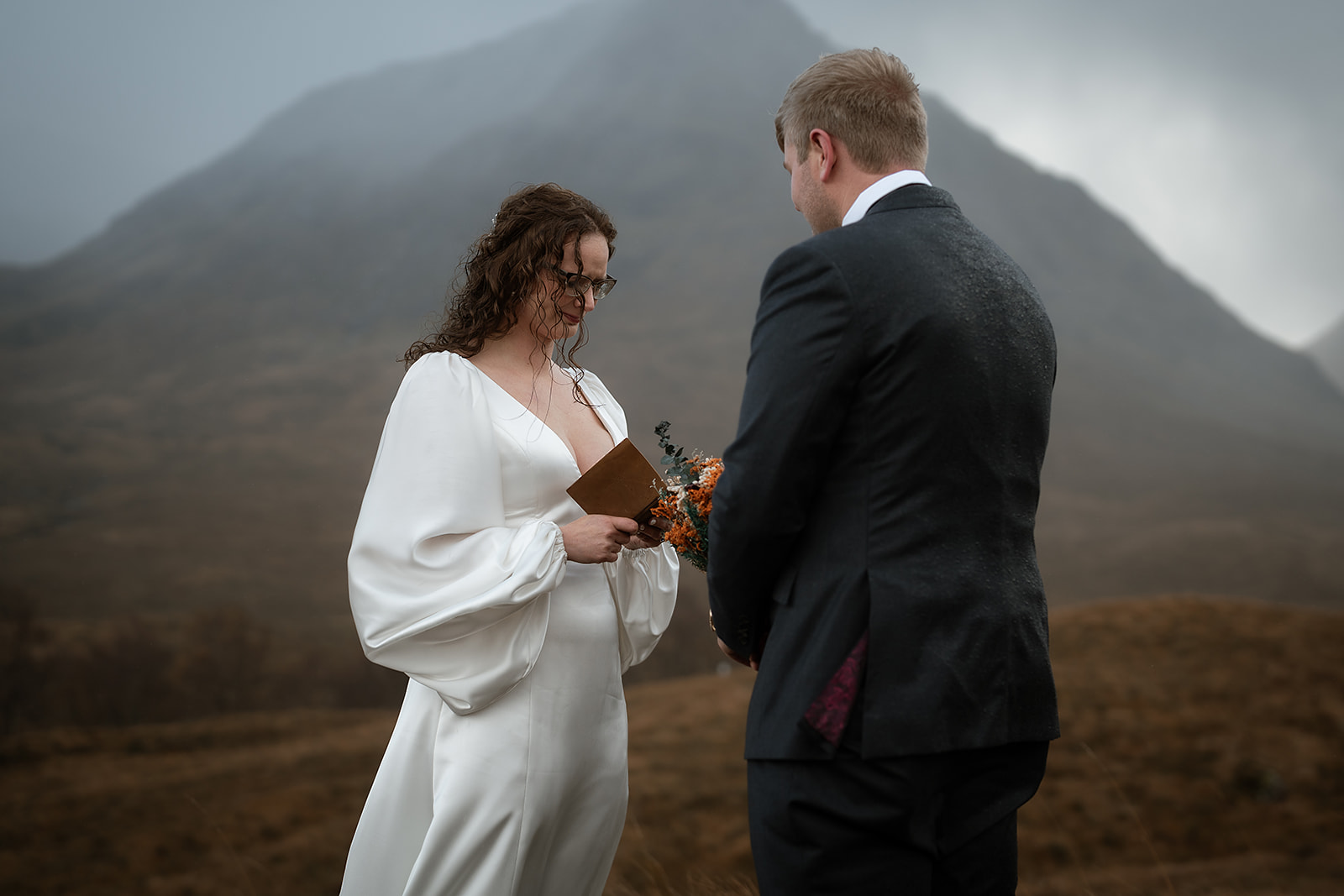
Almost every couple cries during their vows. Many have to stop, take a breath, and start a sentence again. Some laugh through tears. Some can barely get the words out.
This is not a problem. This is the best part. A celebrant worth their salt will give you space. We’ll keep shooting. Nobody is judging you or timing you. Take as long as you need.
Some of the most beautiful photos we’ve ever taken are of couples mid-sob, laughing at themselves for crying, wiping each other’s tears. Those aren’t embarrassing moments. They’re the realest ones.
A Simple Structure If You’re Stuck
If staring at a blank page is paralysing, try this loose structure. It’s not a template — it’s a starting point you can bend however you like.
Open with something personal. A memory, a moment, the first thing you noticed. Something that anchors the vows in your specific story.
Say what you love about them. Be specific. Details beat generalities every time.
Acknowledge what you’ve been through. Relationships aren’t all highlight reels. The hard stuff is part of the story too, and acknowledging it makes the commitment more meaningful.
Make your promises. What are you actually vowing to do? Make them real, make them specific, make them yours.
Close with something that lands. A final line that you’d want to remember. This is the one they’ll hold onto.
When to Write Them
Not the night before. Please, not the night before.
Give yourself at least two to three weeks. Write a first draft, leave it for a few days, come back and edit. The best vows usually go through three or four rounds of revision. First drafts are raw and honest. Revisions trim the fat and sharpen the emotional beats.
Some couples find it helpful to write their vows separately while they’re in the same room. There’s something nice about the shared activity even if you can’t see each other’s pages.
— Jodie & Matt
If you’re curious about what the rest of the elopement day looks like, read our guide on what actually happens on an elopement day. And if you’re still in the early planning stages, our 20 questions guide covers everything you’re probably wondering about. Ready to start planning? Get in touch or check out our pricing.