Why We Created Phindr (And Why It’s the Only Directory We Use)
We’ve been photographing weddings and elopements for over a decade. In that time, we’ve watched the wedding industry become increasingly… well, gross. So we built something to fix it.
Let’s be honest for a second. The wedding industry has a problem. Actually, it has several problems, but the one that’s been bugging us for years is this: everything is pay-to-play.
Directories. Awards. Featured listings. “Best of” badges. Almost all of it comes down to who’s willing to spend the most money, not who’s actually the best at what they do.
We’re done pretending that’s okay.
The Directory Problem
You’ve probably seen the big wedding directories. Hitched. The Knot. WeddingWire. They promise to connect couples with amazing vendors. Sounds great, right?
Here’s what actually happens.
Photographers pay hundreds (sometimes thousands) of pounds per year just to be listed. Want to appear higher in search results? Pay more. Want a “featured” badge? Pay more. Want to be in the “recommended” section? You guessed it. Pay more.
The photographers you see at the top of these directories aren’t necessarily the best. They’re the ones with the biggest marketing budgets. A brilliant photographer who can’t afford premium placement gets buried on page 47. A mediocre photographer with deep pockets? Front and centre.
That’s not fair to couples who deserve to find the right photographer. And it’s not fair to photographers who should be judged on their work, not their wallet.
We stopped using these directories years ago. Not because we couldn’t afford them (though bloody hell, some of those prices). We stopped because we didn’t want to be part of a system that felt fundamentally broken.
The Awards Problem
Oh, the awards. This one really gets us going.
You’ve seen photographers with websites covered in badges. “Award-winning.” “Finalist in the 2024 Whatever Awards.” “Best Wedding Photographer in [Insert Town Here].”
Want to know a dirty secret? A huge number of these awards are essentially purchased.
Here’s how many of them work: You pay an entry fee. Sometimes £30 per image. Sometimes more. The more images you submit, the more you pay. Then, magically, almost everyone who enters becomes a “finalist” or gets some kind of recognition. Because the business model isn’t about celebrating great photography. It’s about collecting entry fees.
Some awards go even further. You win something, then discover you have to pay for your certificate. Pay for your trophy. Pay to attend the awards ceremony. Pay for the magazine feature that announces your win.
One industry article put it perfectly: “Vanity awards usually require substantial payments for nominations or participation. True awards from legitimate bodies won’t ever charge you for the award or for attending their presentation ceremony.”
Even the big platforms are at it. Sites like WeddingWire and The Knot hand out “Best of Weddings” and “Couples’ Choice Awards” essentially for being a paid member. It’s not about the quality of your work. It’s about whether you’re paying them.
Local magazine awards? Often based on public voting that can be easily gamed. One videographer admitted he won second place in a “Best of” competition by just voting for himself multiple times a day. Didn’t even ask anyone else to vote for him.
This is what couples are using to judge photographers. Badges that mean almost nothing.
The Exception: Awards That Actually Mean Something
We should be clear: not all awards are nonsense. Some competitions are run properly, with genuine judging by experts, and recognition based entirely on merit.
The International Wedding Photographer of the Year (IWPOTY) is one we have genuine respect for. They have an actual judging panel of world-class wedding photographers. They give out real cash prizes (over $20,000 USD). Your entry fee gets you judged fairly against thousands of other photographers from around the world. Being a finalist or winner actually means something because it was earned, not bought.
Competitions like Fearless Photographers and the WPJA (Wedding Photojournalists Association) operate similarly. Real judges. Real standards. Recognition based on the quality of your images, not the depth of your pockets.
These are the awards worth paying attention to. If a photographer has won or been a finalist in competitions like these, it genuinely reflects their skill.
But they’re the exception. For every legitimate competition, there are dozens of pay-to-play schemes designed to extract money from photographers desperate for credibility.
Why This Matters for Couples
Here’s the thing. When you’re looking for a wedding photographer, you’re probably using Google, Instagram, maybe one of those big directories. You’re looking at badges and awards and “featured” labels, assuming they mean something.
They often don’t.
The system is designed to benefit whoever spends the most on marketing, not whoever takes the best photos. Couples end up overwhelmed by options that are essentially sorted by advertising budget rather than talent.
Meanwhile, photographers who are genuinely brilliant but rubbish at (or unwilling to play) the marketing game get overlooked. Some of the best wedding photographers we know have barely any social media presence and zero directory listings. They’re fully booked through word of mouth because their work speaks for itself.
But if you’re a couple just starting your search? You’d never find them.
So We Built Something Different
We got tired of complaining about this. So we decided to actually do something.
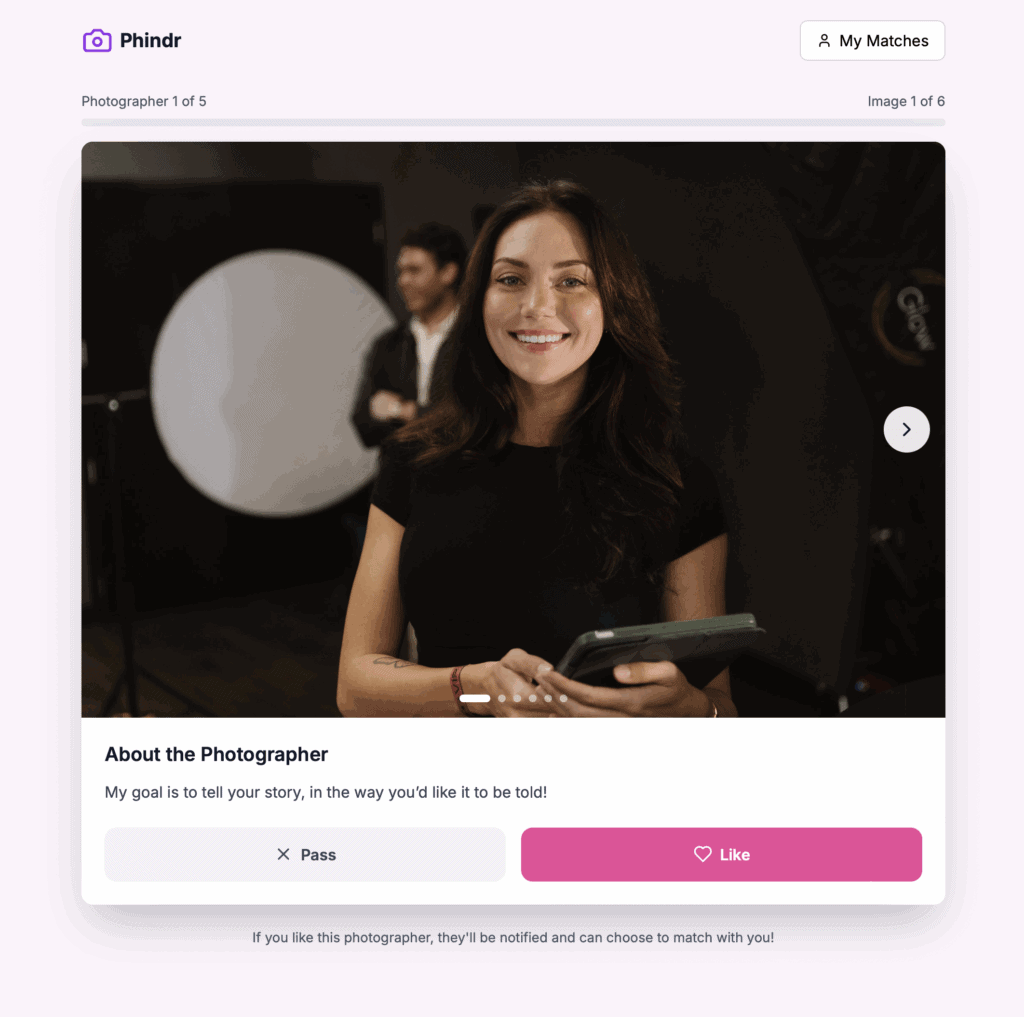
Phindr is the directory we wished existed. And yes, we helped create it, which is why we’re the first to admit our bias. But hear us out on why it’s different.
There are no featured placements. None. Every photographer on Phindr has exactly the same visibility. Whether you’ve been on the platform for two years or two days, whether you shoot 50 weddings a year or 5, you get the same chance to be discovered.
No pay-to-play. Photographers pay a flat monthly fee. That’s it. There’s no “premium tier” that gets you more exposure. No bidding for top spots. No advertising upgrades. Everyone plays by exactly the same rules.
And here’s the bit we’re most proud of: couples browse portfolios anonymously. They don’t see business names. They don’t see how many followers someone has. They just see the work. If they love what they see, they swipe right. If they don’t, they move on.
The photographers who succeed on Phindr are the ones with great portfolios. Full stop. Not the ones with the biggest marketing budgets or the fanciest badges.
That’s how it should be.
Why It’s the Only Directory We Appear On
We’ve been asked many times why we don’t list on the big directories. “Think of the exposure!” people say. “You’re missing out on leads!”
Maybe. But we’d rather get fewer enquiries from people who genuinely love our work than more enquiries from people who clicked on us because we paid to be at the top of a list.
We believe couples deserve better than a system rigged by money. We believe photographers deserve to be judged on their craft, not their advertising spend. And we believe the wedding industry desperately needs platforms that put quality first.
Phindr does that. So that’s where we are.
The Industry Is Changing
The good news? More couples are catching on. They’re getting sceptical of awards and badges. They’re learning that “featured” often just means “paid for placement.” They’re looking for authenticity over polish.
And more photographers are refusing to play the game. They’re building businesses on genuine connections and word of mouth rather than throwing money at directories that don’t deliver.
We think that’s brilliant. The wedding industry has been ripe for disruption for years. It’s finally happening.
If you’re a couple looking for a photographer, do yourself a favour: look at actual portfolios. Ignore the badges. Ask photographers directly about their approach rather than trusting a directory’s algorithm. And if you want a platform that lets you judge work on its merits, give Phindr a try.
If you’re a photographer who’s sick of the pay-to-play nonsense, we get it. We really do. Come join us.
— Jodie & Matt
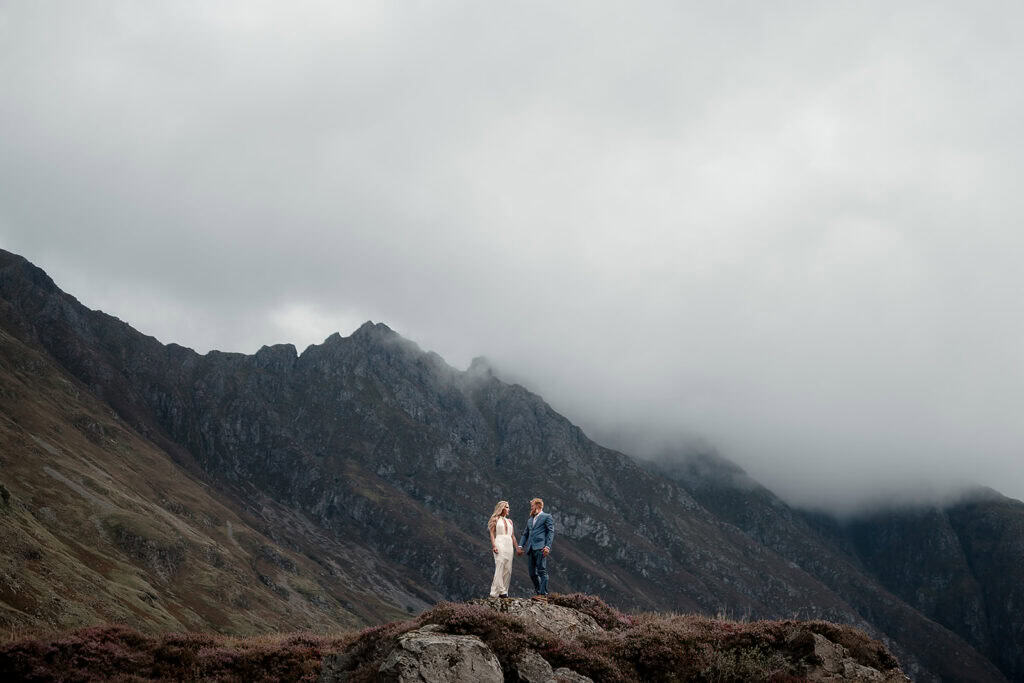
P.S. If you’re planning an elopement in Scotland, we’d love to chat. Get in touch here.