20 Questions About Eloping in Scotland
You’ve got questions. We’ve got answers. Here’s everything couples ask before booking their Scottish elopement.
1. Can Americans legally get married in Scotland?
Yes. Scotland welcomes international couples and your marriage is legally recognised in the United States. You don’t need to register it anywhere or do anything special when you get home. Your Scottish marriage certificate is your proof of marriage, full stop.
There’s paperwork involved (the M10 form, a declaration of status, supporting documents) and you’ll need to submit everything at least 29 days before your ceremony. But the process is well-established and hundreds of American couples do it every year.
With us: We’ve helped hundreds of US couples navigate this. We’ve written a full guide to the legal requirements that walks you through everything.
2. Do we need a visa to get married in Scotland?
If getting married is your primary reason for visiting the UK, you should apply for a Marriage Visitor visa. It costs £127 and takes about three weeks to process. If you’re combining your elopement with a broader holiday and happen to get married during your trip, you’re generally fine entering visa-free on the standard tourist waiver.
When in doubt, get the visa. It removes any ambiguity at the border and costs less than a nice dinner.
3. How far in advance do we need to book?
Legally, Scotland requires at least 29 days notice before you can marry. You can submit paperwork up to three months in advance.
For photographers and celebrants, booking timelines vary. Popular dates in peak season can book 12-18 months ahead. Quieter months might have availability with shorter notice.
With us: We book 18 months ahead for autumn dates, 12 months for the rest of the year. Autumn is peak elopement season in Scotland and our calendar fills fast.
4. Do we need witnesses?
Yes. Scottish law requires two witnesses at every wedding. No exceptions.
If you’re eloping without guests, this isn’t the problem it sounds like. Your photographer and celebrant can often act as witnesses. Alternatively, celebrants usually know local people who are happy to help. Some couples ask hotel staff or even friendly strangers. Witnesses just need to be 16 or older and able to understand the ceremony.
With us: We act as your witnesses. It’s included. We’ve signed more marriage schedules than we can count.
5. What’s the best location to elope in Scotland?
There’s no single “best” location. It depends entirely on what you want to feel.
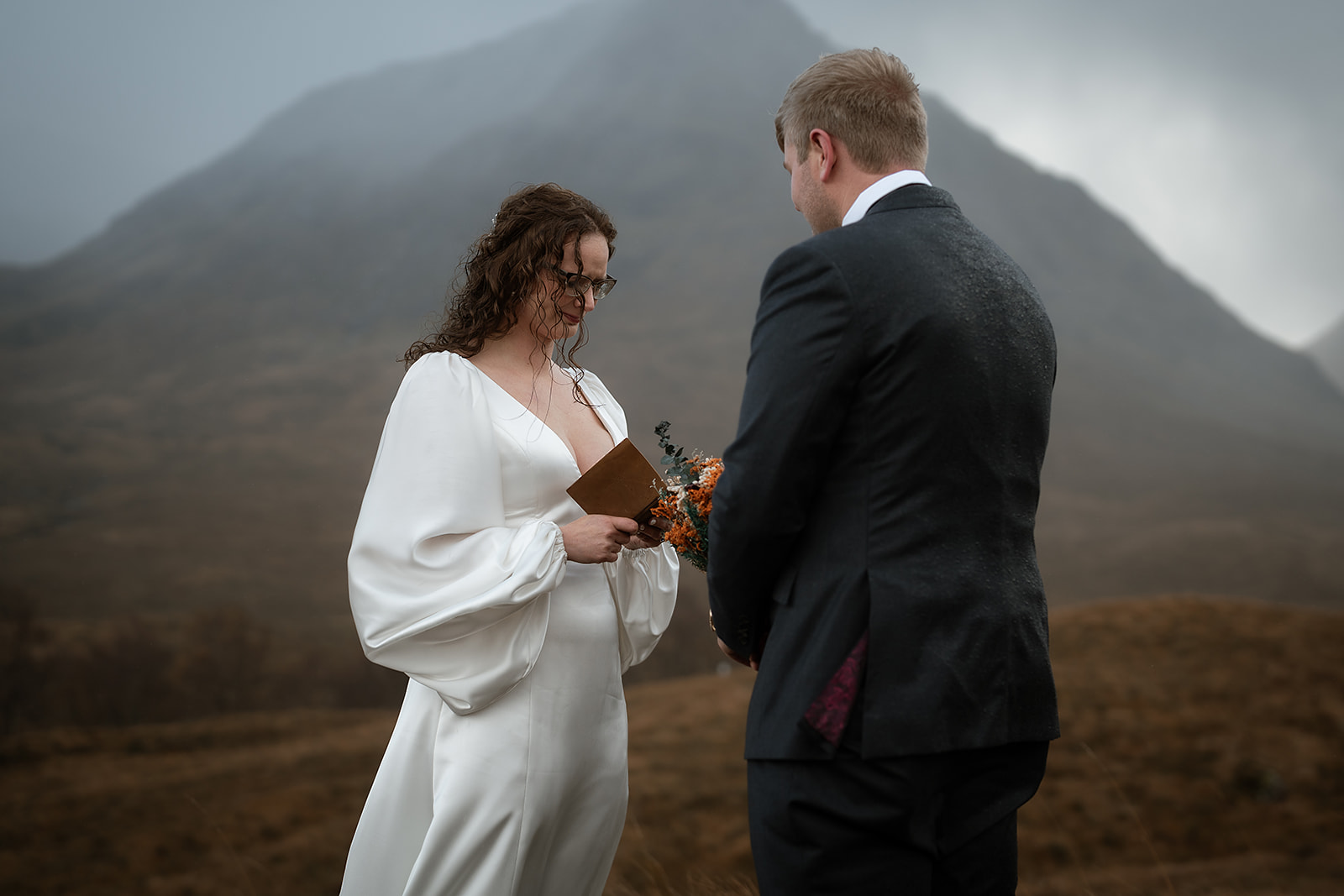
Drama and mountains? Glencoe or the Cairngorms. Moody coastline? Aberdeenshire and the east coast. Forests and fairy tale vibes? Perthshire. City atmosphere with nature nearby? Edinburgh. Ancient castles and history? Take your pick.
The real question isn’t “where’s the best place?” but “what kind of experience do we want?” Start there and the location becomes clearer.
With us: Location planning is part of what we do. We’ll ask about your priorities, show you options you might not have found, and help you figure out the right place for you. We’ve written a whole post on how to choose where to elope if you’re stuck.
6. Can we get married at a castle?
Depends on the castle. Most yes, some no.
Many Scottish castles are ruins on public land, which means you can have your ceremony there without permission. Others are privately owned, managed by Historic Scotland, or require permits and fees. A few don’t allow ceremonies at all.
Any photographer or planner who knows Scotland well should be able to tell you which castles work and which don’t.
With us: We know the castles. Which ones are accessible, which ones get crowded, which ones have the best light at which times of year. We’ll steer you right.
7. Can we get married literally anywhere outdoors?
Yes. This is one of the biggest reasons people choose Scotland.
Unlike most countries (and even other parts of the UK), Scotland allows legal ceremonies to take place virtually anywhere. Mountains, beaches, forests, clifftops, castle ruins, beside a loch. You’re not restricted to licensed venues. As long as your celebrant is authorised and you’ve done the legal paperwork, you can say your vows wherever you want.
It’s one of the most romantic marriage laws in the world, frankly.

8. I’ve heard Skye isn’t the best for elopements. Is this true?
It’s complicated. Skye is genuinely, breathtakingly beautiful. The landscape is unlike anywhere else in Scotland.
But it’s become so popular that the experience has changed. The most photogenic spots are crowded, especially in peak season. The roads are strained. Finding that “just us in the wilderness” feeling is difficult when you’re sharing a viewpoint with a coach tour.
Skye can absolutely work for an elopement. But go in with realistic expectations, consider visiting in the off-season, and make sure your photographer knows how to navigate the crowds.
With us: We don’t shoot on Skye. We made that decision years ago so we could focus on mainland locations where we can offer something quieter and more intimate. If your heart is set on Skye, no hard feelings. We’ll recommend photographers who work there regularly and know it well.
9. What’s the best time of year to elope in Scotland?
Scotland is beautiful year-round, but different seasons offer different experiences.
Autumn (September-November): Dramatic light, golden colours, moody skies. Fewer tourists. Our favourite season.
Winter (December-February): Short days but stunning low light. Snow if you’re lucky. Very quiet. Cold, obviously.
Spring (March-May): Landscape coming alive. Longer days. Can be unpredictable weather-wise.
Summer (June-August): Longest days, warmest weather. But also peak tourist season and midges (tiny biting insects that will find you).
With us: Our favourite months are October through February and late May through June. We’ve got a full season-by-season guide if you want the details.
10. What if it rains on our elopement day?
It’s Scotland. It might rain. It might also be glorious sunshine. Often both in the same hour.
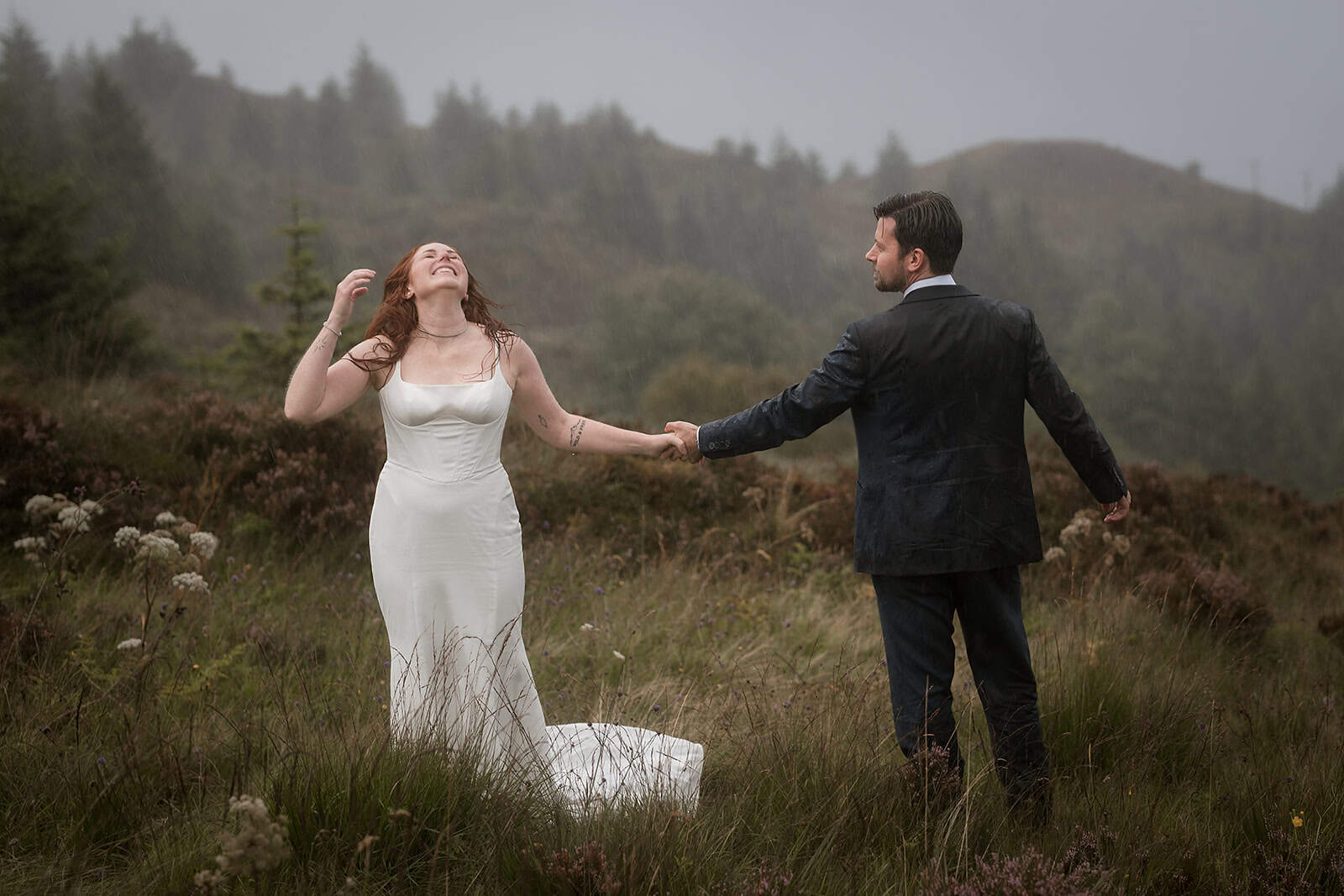
Here’s what experienced elopement photographers will tell you: rain rarely ruins a day. It changes it. Moody skies photograph beautifully. Mist adds atmosphere. Couples huddled under an umbrella can be incredibly intimate.
The real key is having a photographer who knows how to work with Scottish weather, backup location options if needed, and the right clothing layers. A nice shawl or blanket you’re happy to be photographed in, plus a proper waterproof for the moments between shots.
With us: We’ve shot in driving rain, snow and mist so thick you couldn’t see ten feet ahead. Some of our favourite images came from those days. Weather is part of the story.
11. What time of day do elopements usually happen?
Good elopement photographers plan around the light rather than a clock (Unfortunately, most don’t) That usually means working backwards from sunset (or golden hour, the period just before sunset when the light is warmest and softest) or, for early birds, working forwards from sunrise.
If you need six hours to tell the story of the day properly, you’d start six and a half hours before sunset. This means your elopement might begin at 10am in summer or 11am in winter. It feels counterintuitive if you’re used to afternoon weddings, but the light at the end of the day is worth building toward.
With us: We always plan around the light. Your timeline will be built backwards from sunset, with buffer for weather shifts.
12. Can I bring my dog?
Scotland is an incredibly dog-friendly country. Most outdoor locations welcome dogs, many hotels and Airbnbs accept them, and there’s no quarantine for dogs travelling from the US (just paperwork and microchipping requirements you’ll need to sort beforehand).
Check with your celebrant and photographer that they’re comfortable with dogs being part of the ceremony. Most are.
With us: We love dogs at elopements. Although Jodie may get distracted. We did warn you.

13. Where should we fly into?
Edinburgh or Glasgow are your main options. Edinburgh is generally the better choice for most elopements. It’s closer to the Highlands, has a better atmosphere for exploring before or after your wedding, and now has loads of direct flights from the US East Coast.
Glasgow works if you’re heading to the west coast or certain parts of the Highlands. But for most couples, Edinburgh is the answer.
With us: Almost all our couples fly into Edinburgh. We can help you figure out logistics for the rest of your trip too.
14. Do we need to rent a car?
For the elopement day itself: most photographers will drive you between locations, so you don’t need your own car.
For the rest of your trip: if you’re heading to the Highlands, yes, hire a car. Public transport exists but it’s limited, infrequent and slow. If you’re staying in Edinburgh only, you don’t need one. The city is very walkable.
Driving in Scotland means driving on the left, navigating single-track roads in rural areas, and remembering that “20 miles” can take an hour in the Highlands. It’s an adventure in itself.
With us: We drive you on the elopement day. You just need to get yourselves to your accommodation.
15. How do I get my wedding dress to Scotland?
Carry-on luggage is the safest option. Keep it with you, don’t let it out of your sight, don’t trust it to the hold.
Some airlines have stopped allowing wedding dresses as cabin baggage, so check ahead with your specific carrier. If carry-on isn’t possible, some couples ship their dress ahead to their accommodation, or to a trusted contact in Scotland.
Whatever you do, don’t put it in checked luggage. Lost or delayed bags happen. Lost or delayed wedding dresses are a nightmare you don’t need.
With us: We’ve had couples ship dresses directly to our house. Happy to help if you need a safe delivery address. Unless you don’t book us… cos that would be weird.

16. How long does an elopement day actually last?
Longer than most people expect. A typical elopement day runs somewhere between six and ten hours, depending on location, time of year, and what you want to do.
Winter days are shorter due to daylight (and the fact that standing on a Scottish clifftop for ten hours in January would be miserable). Summer days can stretch longer.
The ceremony itself is only 20-30 minutes. The rest is getting ready, travelling between locations, photos, warming up, eating, exploring. It’s a whole day, not just an event.
With us: We’ve written more about what actually happens on an elopement day if you want the full picture.
17. What do we do after the ceremony?
Whatever you want. That’s the beauty of eloping.
Common options: pop champagne or have a hot drink to warm up. Drive around the area stopping for photos at beautiful spots. Have lunch or dinner at a nice pub or restaurant. Head back to your accommodation to decompress. Sit by a fire with whisky. Hot tub, if your Airbnb has one.
The day doesn’t end when the ceremony ends. For many couples, the ceremony is just the beginning.
With us: Think of the rest of the day as part guided tour, part photography session, wholly your wedding day. We’ll take you to spots you wouldn’t find on your own.

18. Will it actually feel like a wedding?
This is the fear we hear most often. “Will it feel real without guests? Will it just feel like a photoshoot?”
The honest answer from couples who’ve done it: yes, it feels like a wedding. Often more so than a big traditional version would have. There’s something about the intimacy, the lack of performance, the fact that every word is actually for each other, that makes it hit differently.
You’re not running around greeting guests. You’re not managing family drama. You’re not exhausted from months of planning. You’re just two people, getting married, in a beautiful place.
With us: We’ve seen this hundreds of times. Couples who were nervous it wouldn’t feel “real” end up sobbing happy tears within minutes of the ceremony starting. We’ve written about this in The Elopement Guilt Spiral if you’re wrestling with this fear.
19. Can we bring guests?
Yes. An elopement doesn’t have to mean just the two of you.
Some couples bring parents, siblings, best friends. Some bring 10-20 people. Some bring 30+. At a certain point it starts to feel more like a small wedding than an elopement, which changes the energy and logistics, but there’s no hard rule.
The key is being intentional about it. If you’re bringing people, make sure they’re people who will add to the day rather than complicate it.
With us: Honestly? We prefer zero guests. That’s the elopement sweet spot for us. But 2-10 works well too. We’ve done up to 30 (like Kimmy and Sam’s Slains Castle wedding). Beyond that, it’s a different kind of day.
20. Can we elope with genuinely just the two of us?
Absolutely. That’s the whole point for many couples.
You’ll have your celebrant conducting the ceremony and your photographer capturing it. They’ll likely act as your two legal witnesses. But in terms of guests, spectators, audience? Just you two. Standing in a beautiful place. Saying vows to each other. Nobody watching.
That’s the magic of it.
With us: Most of our couples elope with just the two of them. It’s our favourite way to work.
— Jodie & Matt
Still have questions? Get in touch. We’re always happy to chat through the details. Or if you’re ready to start looking at packages, check out our pricing.